Is Fishin' Frenzy a scam, or are you being played by something else?
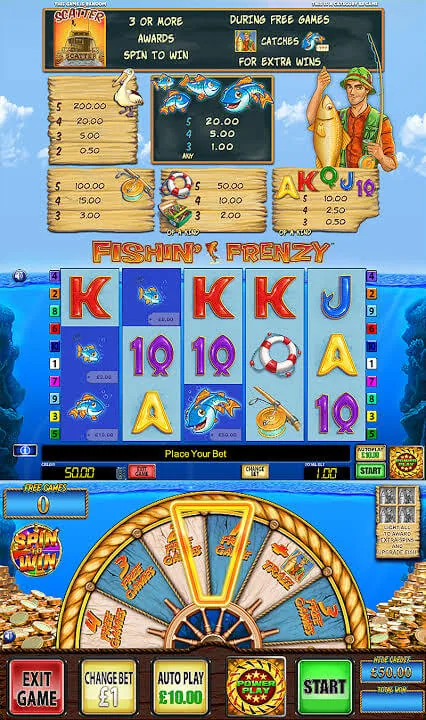
Type «Fishin' Frenzy scam» into Google and you'll find a thousand nervous questions. Is the game rigged? Are those massive win videos real? Can you trust the site asking for your card details? The short answer: the game itself isn't a scam—it's a licensed slot with published maths from a known provider—but the ecosystem around it absolutely is, and it's designed to separate you from your money before you even spin once.
Here's what's actually happening: Fishin' Frenzy is real, regulated, and available on UKGC-licensed operators across the UK. But scammers know it's popular, so they've built an entire shadow industry of fake apps, deepfake influencer videos, cloned sites, and rigged demos that look identical to the real thing. Your job is to know the difference in under a minute, and to understand what happens to your bankroll when you do find the legitimate version.
What's legitimate: the game, the provider, the maths
Fishin' Frenzy is a Blueprint Gaming slot—Blueprint is a UK studio owned by the Gauselmann Group, a German gaming conglomerate that's been around since the 1950s. The game has a published RTP (return-to-player percentage, typically 96.12% on the standard version), certified by independent testing labs like eCOGRA or Gaming Laboratories International. That RTP is the mathematical guarantee: over millions of spins, the game pays back £96.12 for every £100 wagered. The remaining £3.88 is the house edge—the operator's cut and the cost of keeping the lights on.
Every spin result comes from a certified random-number generator. You can't predict it, you can't manipulate it, and neither can the casino. The game is audited, the maths are public, and Blueprint's licences are on file with regulators across Europe. If you're playing on a UKGC-licensed site—check the footer for the licence number and verify it in the UKGC public register—you're playing the genuine article. The house edge is transparent, the volatility is documented, and the game works exactly as advertised.
The scam layer: fake apps, deepfakes, and rigged demos
Here's where the actual fraud lives. Scammers know Fishin' Frenzy is searched thousands of times a month, so they've built traps around it:
- Fake apps: Android APKs and dodgy iOS profiles that claim to be «the official Fishin' Frenzy app». Blueprint doesn't make a standalone app—the game runs in your browser or inside a licensed casino's app. These fake apps either steal your payment details or serve you a rigged version of the game with no real payout mechanism.
- Deepfake influencer videos: you'll see TikTok or Instagram clips of celebrities supposedly winning £10,000 on Fishin' Frenzy. The audio is AI-generated, the face is deepfaked, and the gameplay footage is either edited or running on a demo with fabricated balance numbers. The goal is to funnel you through an affiliate link to an unlicensed site.
- Cloned sites and rigged demos: sites that look like legitimate casinos but aren't in the UKGC register. They'll let you play a free demo that hits suspiciously often, then when you deposit real money, the RTP drops or your withdrawal request vanishes. Some use stolen branding from real operators; others invent names that sound official.
- Bought reviews and fake «strategy» guides: YouTube videos and blog posts that promise secret patterns or betting systems to beat the RNG. There's no such thing—RNG results are cryptographically random—but these guides exist to drive traffic to unlicensed affiliate links, where the reviewer earns commission on your deposits.
The common thread: these scams rely on your excitement and your urgency. They want you to click, download, or deposit before you verify anything.
Spotting the real game in sixty seconds
Here's your checklist to separate genuine Fishin' Frenzy from the clones:
- Check the footer for a UKGC remote gambling licence number. It's usually a long alphanumeric string starting with 000- or 39-. Copy it and search the UKGC public register—if the operator isn't listed or the number doesn't match, close the tab.
- Look for GAMSTOP integration. Every UKGC-licensed site is required to connect to GAMSTOP, the national self-exclusion scheme. If the site doesn't mention it prominently—usually in the footer or responsible-gambling section—it's not licensed to serve UK players.
- Verify the payment methods. UKGC operators accept debit cards (not credit—those have been banned for gambling since 2020), PayPal, Apple Pay, Trustly, or paysafecard. Withdrawals go out via Faster Payments (same day to two working days) or back to your debit card (one to three days). If the site asks for a credit card, cryptocurrency, or wire transfer to an offshore account, it's unlicensed.
- Test the stake caps. If you're 18–24, the maximum spin is £2.00. If you're 25 or older, it's £5.00. Licensed sites enforce this automatically. If you can bet £10 or £50 per spin, you're on an illegal site.
- Look for affordability messaging. UKGC operators must run affordability checks starting at £150 net deposits per month. If you can deposit £500 on your first session without being asked a single question, the site isn't following UK regulations.
Where you can legally play in the UK
Fishin' Frenzy is available on dozens of UKGC-licensed operators—household names like Grosvenor Casinos, Buzz Bingo, PartyCasino, and others you can verify in the UKGC register. These are examples, not endorsements; your job is to check the licence yourself. Demo play is common, but many sites now require you to log in and verify your age (18+) before you can access free play—that's a UKGC requirement to prevent underage gambling.
When you deposit, expect identity checks before your first withdrawal. You'll submit a photo ID (passport or driving licence), proof of address, and sometimes a selfie or a document showing the source of funds. This is KYC (know-your-customer) compliance, and it typically takes 24–48 hours. If a site lets you withdraw thousands without asking for documents, it's not following anti-money-laundering rules, and that's a red flag.
Your winnings are tax-free—the UK doesn't tax gambling returns for players. Operators pay Remote Gaming Duty, which is now 40% of gross revenue. That cost is baked into the house edge, not passed to you directly.
The hype trap: what actually happens to your bankroll
Even when you're playing the real, licensed, mathematically fair version of Fishin' Frenzy, the house edge and volatility are designed to drain your bankroll over time. The game is medium-to-high volatility, which means long stretches without a bonus round, then occasional big hits that feel like a win but statistically just recoup part of your losses. The RTP of 96.12% is calculated over millions of spins—your session of 200 spins could land anywhere from 80% to 115% return, and the variance is brutal.
Here's the trap: you deposit £50, hit a £120 win in the free spins, and feel like you've beaten the system. But the maths say that if you keep playing, that £120 bleeds back into the game. Most players don't walk away after a win—they chase the next bonus, and the house edge grinds you down. The 96.12% RTP means you're losing £3.88 per £100 wagered in the long run, and no betting pattern or «strategy» changes that. The RNG doesn't remember your last spin, and it doesn't owe you a win.
Factor in the stake caps—£2.00 per spin if you're 18–24, £5.00 if you're older—and you can burn through £50 in 10–25 spins if you're hitting dead spins. Affordability checks kick in at £150 net deposits per month, using credit-reference data. If you're depositing more, expect your account to be flagged, and the operator will ask for payslips or bank statements to prove you can afford the losses.
Responsible limits that actually matter
UK law requires every UKGC operator to offer deposit limits, loss limits, and session time-outs. Set them before your first deposit—most players don't, then regret it when they've blown £200 in an hour. Daily deposit limits of £20 or £50 are common starting points; you can adjust them, but increases take 24 hours to take effect (cooling-off period). Decreases are instant.
If gambling stops being entertainment and starts feeling like a problem, GAMSTOP is the national self-exclusion scheme. One registration blocks every UKGC-licensed site for a minimum of six months, up to five years. It's free, it's immediate, and it's irreversible during the exclusion period. BeGambleAware offers free, confidential support if you need someone to talk to.
You must be 18 or older to play. Sites verify this before you can deposit, using credit-reference checks, and they'll ask for ID before your first withdrawal. If someone underage is using your account, the operator will lock the account and void any winnings—that's the law, and there's no appeal.
The verdict: what's real, what's rigged
Fishin' Frenzy isn't a scam—it's a licensed slot with transparent maths, a published RTP, and certification from independent labs. The game works exactly as advertised on UKGC-licensed operators, and the house edge is the cost of playing, not evidence of fraud.
But the ecosystem around it is absolutely crawling with scams: fake apps that steal your payment details, deepfake videos that funnel you to unlicensed sites, rigged demos that vanish your deposits, and affiliate links that earn commission on your losses while promising you secret strategies that don't exist. Your defence is verification: check the UKGC register, look for GAMSTOP, test the stake caps, and walk away from any site that asks for a credit card or lets you bet more than £5.00 per spin.
The real trap isn't the game—it's the belief that you can beat the maths. Volatility means losing runs are normal, the RTP is theoretical over millions of spins, and the house edge guarantees that the operator profits in the long term. Play for entertainment, set limits before you start, and know when to walk away. That's the only strategy that works.
FAQ
How do I verify a Fishin' Frenzy site is legitimate?
Check the footer for a UKGC remote gambling licence number—it's usually a long alphanumeric string. Copy it and search the UKGC public register to confirm the operator is listed. Look for GAMSTOP integration in the responsible-gambling section, verify the payment methods (debit cards, PayPal, no credit cards), and test the stake caps (£2.00 per spin if you're 18–24, £5.00 if you're older). If any of these fail, the site isn't licensed to serve UK players.
Are those massive win videos on social media real?
Most aren't. You're seeing one of three things: deepfake influencer clips where the audio and face are AI-generated, edited gameplay with fabricated balance numbers, or cherry-picked wins from hundreds of hours of play. The goal is to drive you through an affiliate link to an unlicensed site. Real wins happen—the maths allow it—but the videos you're shown are curated to make the game look more generous than it statistically is.
Can I download an official Fishin' Frenzy app?
No. Blueprint Gaming doesn't publish a standalone Fishin' Frenzy app. The game runs in your browser or inside a licensed casino's app (available on Google Play or the App Store from UKGC-licensed operators). Any APK or iOS profile claiming to be the «official app» is fake—it's either stealing your payment details or serving you a rigged version with no real payout mechanism.
What happens if I play on an unlicensed site?
You have no legal protection. If the site refuses to pay out your winnings, vanishes with your deposit, or uses your card details fraudulently, you can't complain to the UKGC because the operator isn't regulated. Your bank might refuse a chargeback because you knowingly used an illegal gambling site. You also risk identity theft if the site sells your KYC documents on the dark web. The only safe option is a UKGC-licensed operator that's in the public register.